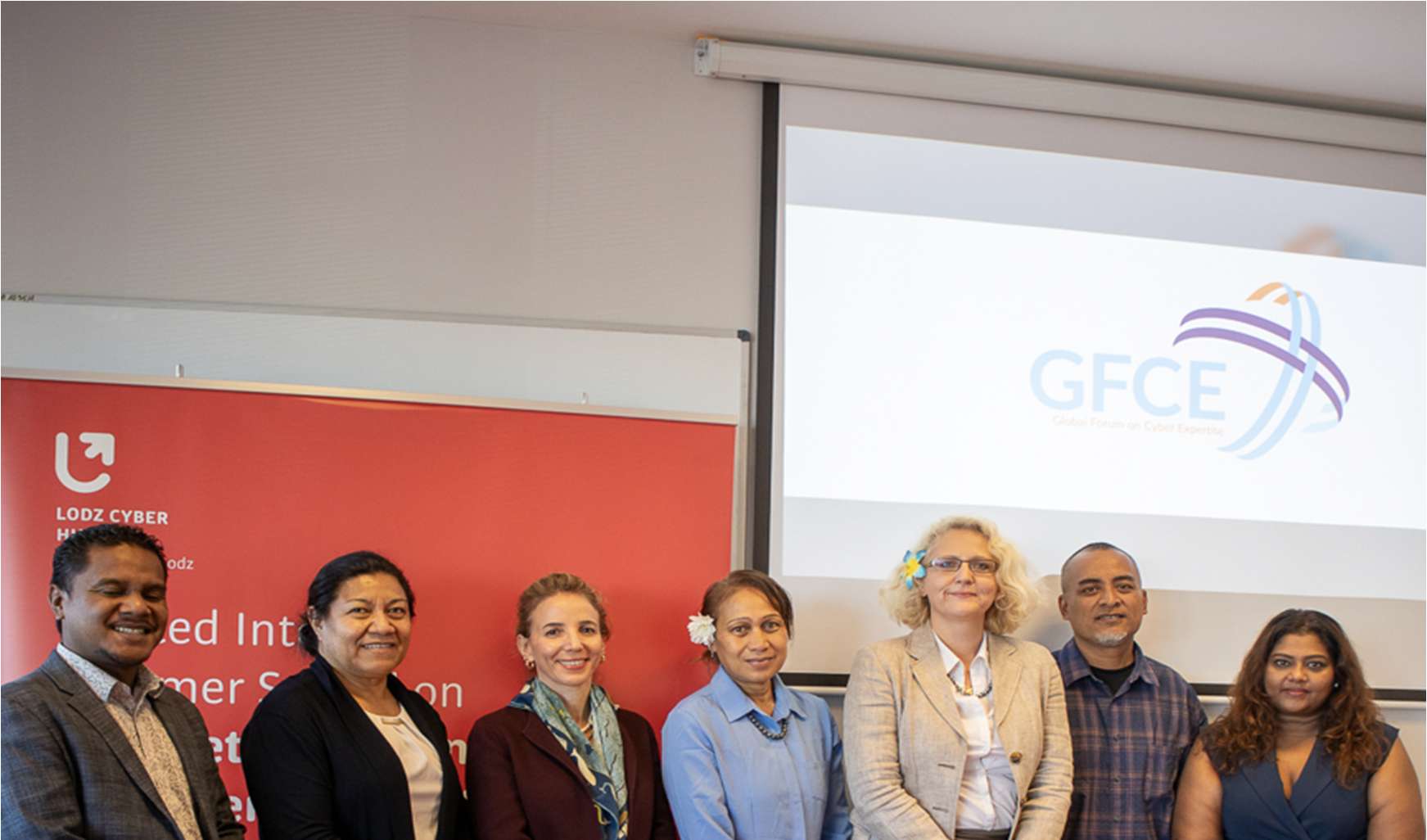
GFCE Supports Pacific-Led Perspectives on Satellite Connectivity and Disaster Resilience at SSIGIL 2025
From 23–26 September 2025, the Global Forum on Cyber Expertise (GFCE) contributed to the Summer School on Internet Governance and International Law (SSIGIL) at the University of Łódź, Poland, bringing Pacific perspectives to global discussions on satellite connectivity, disaster resilience, and digital governance.
The Summer School convened experts, practitioners, and emerging leaders to examine how satellite technologies intersect with international law, cybersecurity, climate adaptation, and digital sovereignty, with a strong focus on regions that depend on satellite connectivity for critical services and emergency response.
Funded by the Internet Society Foundation and co-organised with GigaNet, the programme was delivered in partnership with the GFCE, UNU-CRIS, Queen Mary University of London, the University of Surrey, and Stetson University College of Law. The GFCE also coordinated participation by Pacific delegates from Tuvalu, the Federated States of Micronesia, Palau, and Fiji, supported through U.S. sponsorship.
Advancing Secure and Inclusive Connectivity
Across three days, discussions addressed the governance of the orbital commons, regulatory approaches to Low Earth Orbit satellites, and the role of satellite broadband in disaster zones. Sessions highlighted the need for responsible satellite deployment, integration of cybersecurity into disaster planning, and stronger international cooperation to protect critical digital infrastructure during crises.
GFCE contributions emphasised Pacific-led approaches to connectivity and resilience, recognising that many communities across Polynesia, Micronesia, and Melanesia rely almost exclusively on satellite internet. Case studies showcased how satellite technologies are supporting digital sovereignty, climate adaptation, and inclusive service delivery, from digital nation-building initiatives in Tuvalu to resilient connectivity models in Micronesia, Fiji, and Palau.
Bridging Policy, Practice, and Cyber Resilience
Comparative panels and scenario-based exercises explored legal and policy frameworks for disaster connectivity, public–private partnerships, and responses to compound crises involving both physical disasters and cyber incidents. Participants examined ransomware scenarios, backup communications, ethical emergency messaging, and data protection, underscoring the importance of locally grounded policy development, capacity building, and cross-sector coordination.
The final day focused on the intersection of climate change, connectivity, and cybersecurity, reinforcing the role of resilient digital infrastructure in supporting the Sustainable Development Goals and protecting vulnerable communities during climate-related disruptions.
Looking Ahead
Participant feedback highlighted strong support for continuing the initiative through cross-regional knowledge exchange, working groups, and future research outputs, as well as interest in expanding participation and hosting similar programmes in the Pacific.
Through its engagement at SSIGIL 2025, the GFCE reaffirmed its commitment to inclusive, multi-stakeholder cooperation and to supporting regions where secure and resilient connectivity is essential for disaster response, sustainable development, and digital resilience.